
Affiliate disclosure: when you buy through a link on this page, RigTested may earn a commission at no extra cost to you. It's how we keep the site running.
Airing down is the biggest traction win you can make on a truck, and starting costs less than a tank of gas. The catch is that every dedicated deflator does the same job: it takes the air out the way your compressor can't. Most compressors push air in fine and are a dead end for deflating, so overlanders end up with a bag of single-screw valves, a cracked check-valve, and a lot of second-guessing. The tools below are bigger, sturdier, and cheap enough that you're not gambling on them in the middle of a rock field. The picks below are the ones whose design suits sand, clay, and granite.
Quick picks
| Product | Price | Range | Pack | Best for |
|---|---|---|---|---|
| Spurtar Tire Deflator | $8.99 | 6-30 PSI | Single | Budget backup you forget about |
| Rhino USA 4-Pack | $39.90 | 10-30 PSI | 4 valves | Matching all four corners fast |
| ALL-TOP Auto-Stop 4-Pack | $39.99 | 10-30 PSI | 4 valves + caps | Set-and-forget with spares |
| BOULDER automatic with gauge | $19.99 | 0-80 PSI | Kit | Easiest start, gauge included |
Spurtar Tire Deflator: the cheap insurance
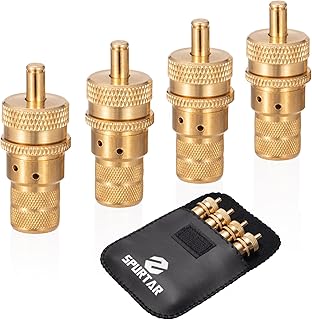
Spurtar Tire Deflator · $8.99 · 6–30 PSI, single valve
Six to thirty PSI covers the real-world range most people air down to, and this is one valve that does the whole thing for nine dollars. It clamps over your existing stem, you turn the knob, and it bleeds air out at a controlled rate instead of the whoosh-and-pray you get from cracking a compressor's deflator. It makes a good spare for the cab because it's cheap enough to treat as insurance rather than equipment. The quirk is that there's no gauge on it. You set the rate, then confirm the number on your compressor's display or a separate gauge. If you already read pressure somewhere else that's a non-issue. If you don't, you'll want to pair it with one of the gaged options below. It tops out at 30, which is plenty for a 24 on the sand or a 26 on rock without pushing the full top of the range.
Rhino USA 4-Pack: match all four corners

Rhino USA Adjustable Tire Deflator Kit (4-Pack) · $39.90 · 10–30 PSI
This is the setup I actually run. You screw a valve onto each wheel, set all four to the same number, and the truck air-downs to that pressure on every corner at once. What people get wrong here is consistency. If the left side drops to 22 and the right side sits at 25, the truck tracks to one side and the tires in the middle take more load over time. Doing that by hand with one gauge and one wheel at a time is slow, and you always doubt the last number you read. Setting four of these to 24 and letting them all bleed in parallel is faster and I trust the result more than I trust my own hand. The ten-to-thirty range matches the band I work in day to day, and four valves means you're not swapping one between tires and re-tightening it every wheel.
ALL-TOP Auto-Stop 4-Pack: it shuts itself off

ALL-TOP Adjustable Auto-Stop Kit (10–30 PSI) · $39.99 · 4 valves + 5 caps
Same four-at-once idea as the Rhino, but the valves stop the flow at the pressure you dial in on their own. You crack the valve, watch the number climb, and it closes on its own instead of you hovering there watching it and pinching the valve shut. That sounds like a small thing until you're doing it on sand in bright sun and you'd rather be checking the trail than babysitting four gauges. The spare valve caps included matter more than they look. These live in a dusty bed, and the caps keep grit out of the valve body, which is the part that seizes up when sand works into the threads. Range is ten to thirty, in line with the others here. If you want the set-and-walk-away behavior on all four corners, this is the one.
BOULDER automatic with gauge: easiest start

BOULDER TOOLS Automatic Tire Deflator Kit · $19.99 · 0–80 PSI, gauge included
Would I hand this to someone who has never aired down a tire? Yes, without thinking. It's automatic and it has a gauge built in, so the "what's my actual pressure right now" question that trips up every single first timer is answered on the same tool. The range is wide, zero to eighty PSI, so it doubles as a general air-down and you aren't capped at the thirty-PSI ceiling the others hit. That's a nice bit of flexibility for a tire that ends up heavier than the stock range. The auto-stop means you set a number and step away, same as the ALL-TOP. At twenty dollars with a gauge already on it, it's the lowest-friction place to start if you don't want to spend separately on pressure display. I'd only reach for a different one if I wanted a matched four-corner kit from the same tool, in which case the Rhino or ALL-TOP make more sense.
Three common mistakes
One: dropping to a number that feels low in the parking lot but is high once the tires have been warm for twenty minutes in a climb. Tires build pressure as they heat, so the 24 you read at the trailhead will read 26 or 27 by the time you get on the rock. Set a touch lower and let the work heat do the rest. Two: airing down all four to different numbers because it's faster to just guess each one. The truck will fight you and the inner tires will wear uneven. If you only buy one of these tools for a reason, this is it, the ability to set the same number on all four and trust it. Three: leaving it set and forgetting the valve is still open when you air back up, so you're fighting the deflator the whole time. Close the knob before you hook up the compressor, then check the display. Small habit, saves a five-minute fight every single time.
Which one to buy
For a dedicated rig, the ALL-TOP four-pack is the pick because the auto-stop and the spare caps save you from babying a valve. For a spare that always has to be there, the Spurtar lives in the cab for the price of a sandwich. If someone is asking "where do I start before I've committed to airing down every trip?" the BOULDER is the answer because the gauge removes the biggest source of error. Airing down is also the first step before a real recovery effort, because a tire at 24 or lower grips soft ground in a different league than the same tire at 35. If you're building that recovery setup too, the recovery boards and a decent trail jack are the two things I'd buy alongside a deflator, in that order. And for the other half of the job, putting the air back in when you hit pavement, the inflator guide covers the pumps I actually recommend.
More off-road air gear
Airing down also changes the way the tires throw spray, so if the mud is piling up on the tailgate and the bed, the fix is usually in the rear. Our mud flap guide covers the panel sizes that keep up with a tire running low. Before you buy, the sticker prices above are almost never what you end up paying. The deals hub tracks the same overland gear with affiliate codes baked in, and it's usually beating these prices by ten to fifteen percent right now. It's the same gear covered here, so it's worth a look before you check out over there:
Prices on these move and the links here are the ones I'd actually buy. If a valve dies on you or you find a tool that holds pressure better than anything on this list, let us know and we'll fold it into the next pass.
Related guides
- Off-road recovery guide: the full cluster in one place
- Recovery boards
- Recovery kits
- Off-road jacks
Get the gear that holds up
New guides, hands-on reviews as they land, and real deals, about once a week. No spam, unsubscribe anytime.